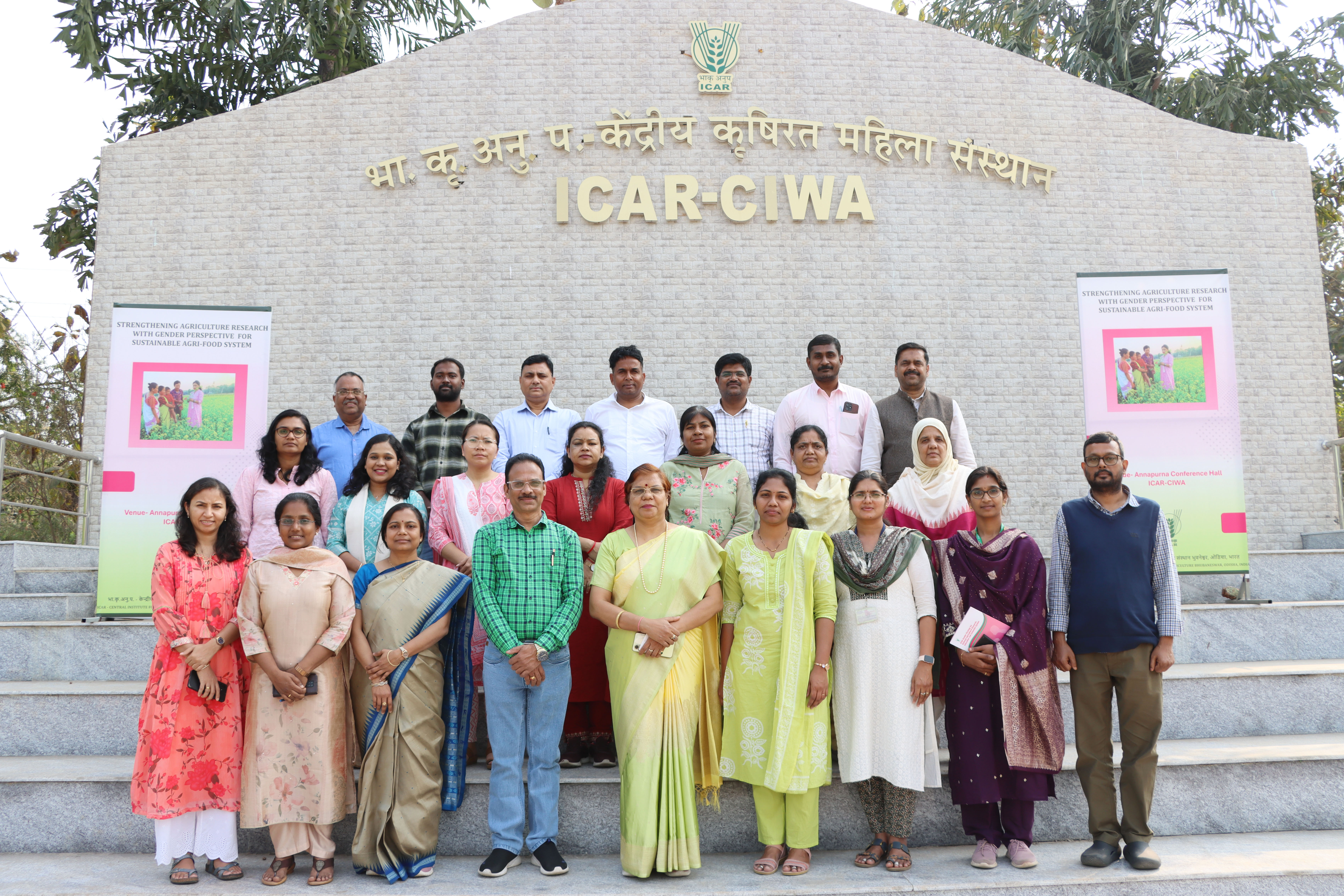
| The ICAR has recently come out with the ICAR Gender Strategy to strengthen and mainstream gender perspectives across agricultural research, education, and extension within the National Agricultural Research, Education and Extension System (NAREES). In alignment with this mandate, all ICAR institutes have nominated Nodal and Co-Nodal Officers for Gender Research in Agriculture (NO-GRA) to operationalize the strategy at the institutional level. In line with this national effort, ICAR-CIWA has initiated a systematic capacity-building process through a series of structured training programmes. As a significant first step, the Institute organized its first comprehensive five-day training programme on ‘Strengthening Agriculture Research with Gender Perspective for Sustainable Agri-Food System’ from 2-6 February 2026 for NO-GRA officers, with a strong emphasis on translating the ICAR Gender Strategy into actionable research, education, and extension frameworks that promote integration, inclusivity, and equity for sustainability in national agri-food systems. |
| The first technical session was led by Dr. Mridula Devi, Director, ICAR-CIWA, who delivered lecture on ‘Strategy for Gender Responsive Agricultural Research, Education & Extension’, underscoring the institutional commitment of ICAR to move from gender-neutral approaches to gender-responsive and gender-transformative frameworks in research, education, and extension aligning with the institutional mandate. Director highlighted about the guiding principles, the strategies for research, education and extension in agriculture, key performance indicators, its implementation and how mainstreaming gender perspectives strengthens scientific outcomes, enhances technology adoption, and ensures inclusive and sustainable agricultural growth. She also elaborated on the theoretical assessment of technologies for gender responsiveness in agri-food systems, followed by a hands-on participatory session on assessing gender responsiveness and women-friendliness of technologiesdeveloped by different institutions. The participants were oriented to the National Information System for Women in Agriculture (NISWA) portal with a focus on collection, compilation, documentation and sharing of gender disaggregated datagenerated in NAREES institutions aligning with the institutional mandate. |
| Sector-specific sessions focused on integrating gender perspectives into climate-smart technologies in crops, horticulture, livestock, fisheries, and aquaculture, emphasizing women’s access to resources, technologies, services, and decision-making processes. The programme further addressed nutrition-sensitive agriculture, highlighting the role of women in household nutrition and food security, and explored pathways to align agricultural research with improved dietary diversity and health outcomes. Special sessions on the development and ergonomic evaluation of women-friendly farm tools and equipment enabled participants to understand principles of participatory design, drudgery reduction, safety, and productivity enhancement for women workers. Discussions on occupational health hazards in production and post-production activities sensitized participants to gender-specific risks and preventive strategies in agricultural operations. The programme also emphasized gender-sensitive extension models and institutional innovations for empowering farm women, focusing on approaches such as women collectives, producer groups, self-help groups, and community-based organizations to enhance women’s access to technologies, markets, credit, and advisory services. Sessions on gender-transformative research and development approaches enabled participants to critically reflect on social norms, power relations, and institutional practices influencing women’s participation and leadership in agriculture, and to design interventions that move beyond inclusion towards empowerment and structural change. |
| A major highlight of the training was the strong focus on experiential learning. Participants actively engaged in practical exercises on assessing the gender responsiveness and women-friendliness of agricultural technologies, using structured tools and participatory methods. This was followed by intensive group work on the formulation of research projects with a gender perspective, where participants developed concept notes and proposals addressing sustainability, productivity, resilience, and women’s empowerment in diverse agro-ecological contexts. Experience-sharing sessions on women-friendly technologies, case studies, and success stories from different ICAR institutes further enriched the learning environment and facilitated cross-institutional knowledge exchange. |
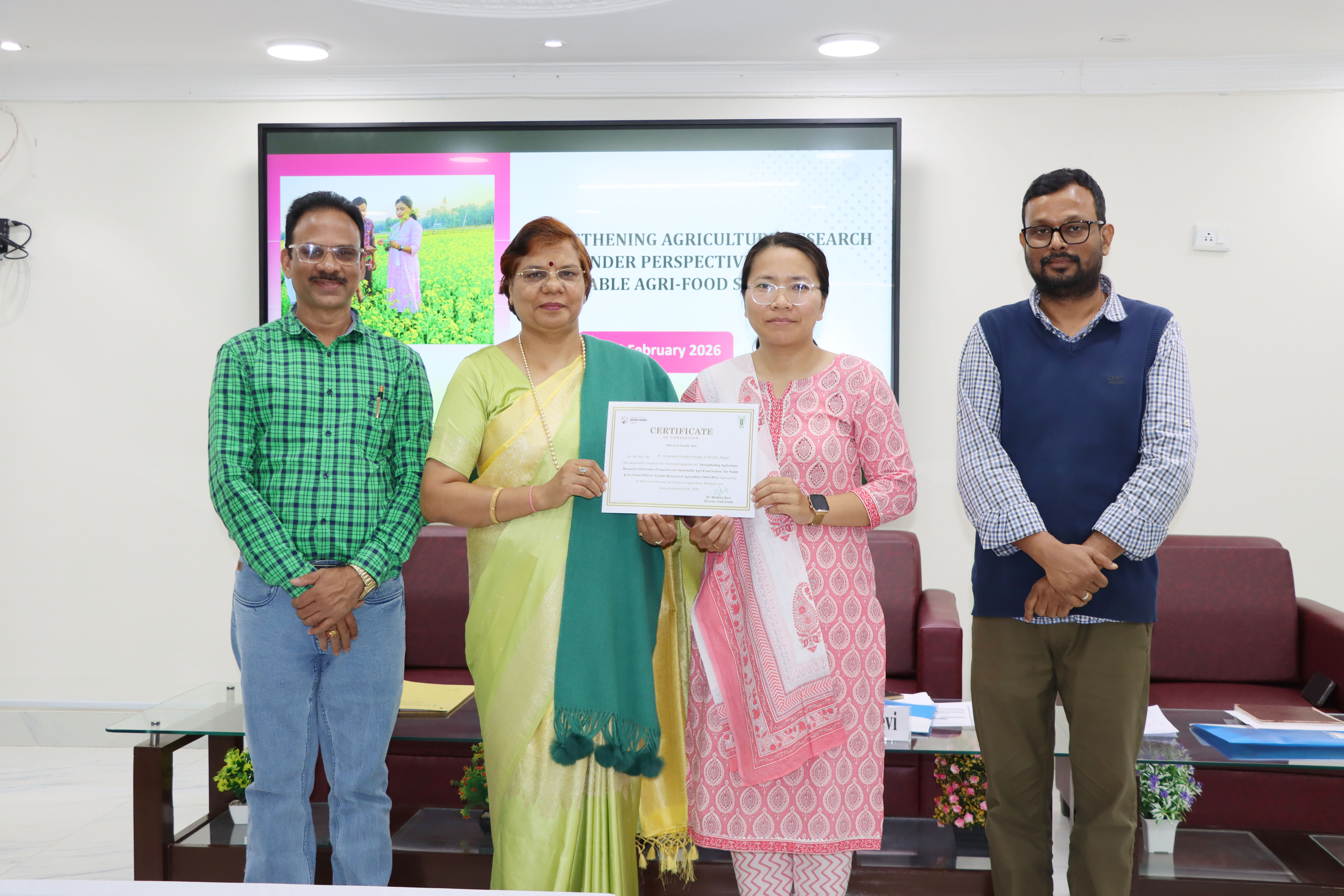
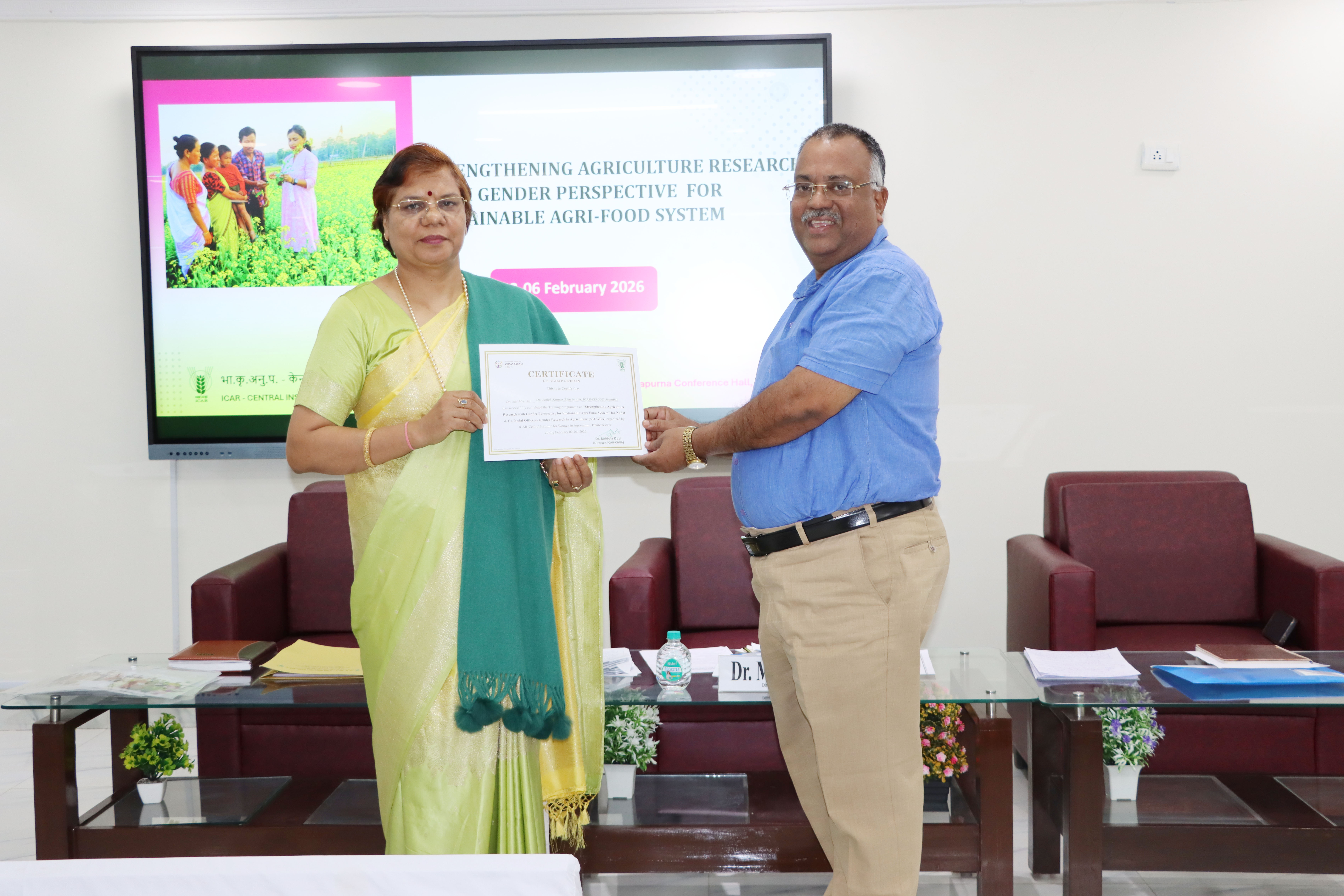
| The programme was led by a distinguished panel of scientists and experts from ICAR-CIWA, who provided technical guidance throughout the programme. The training concluded with post-evaluation and valedictory sessions, during which participants shared reflections on learning outcomes and action plans for mainstreaming gender perspectives within their respective institutes. The programme significantly strengthened the knowledge, skills, and confidence of NO-GRA officers to conceptualize, design, implement, and evaluate gender-responsive and gender-transformative agricultural research and extension initiatives, thereby contributing to the development of sustainable, inclusive, and equitable agri-food systems across the country. |
 |
 |
 |
